Lumbini to Lo Manthang (L2L) – Planetary Health Field School 2025
From the Terai lowlands to the Tibetan Plateau, an interdisciplinary field school exploring climate, culture, biodiversity, health, and sustainability across one of the world’s most dramatic ecological gradients.
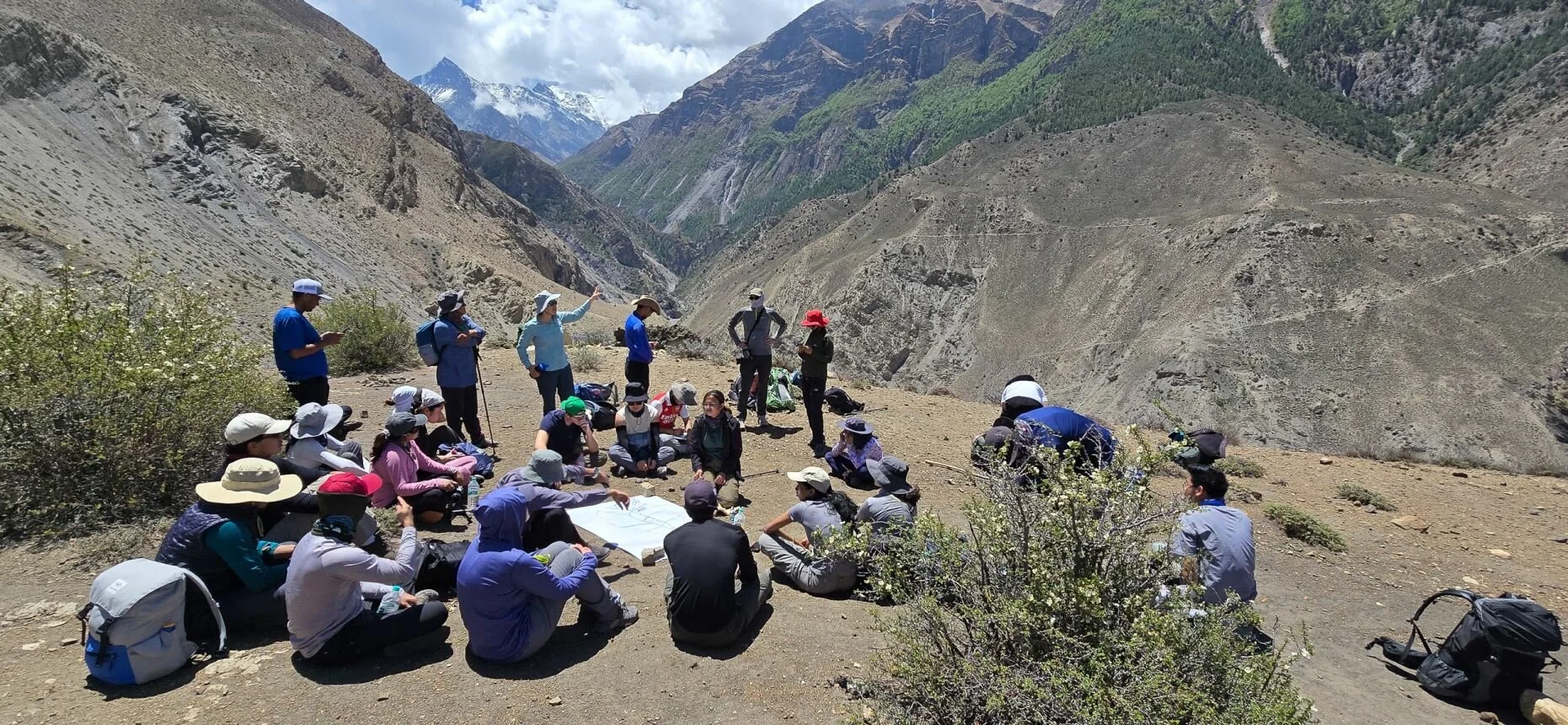
Overview:
Lumbini to Lo Manthang (L2L) – Planetary health across the Himalaya, 14 May-7 June, 2025
The 2025 L2L Field School was an interdisciplinary, field-based learning experience designed for undergraduate students from diverse academic backgrounds, including environment, engineering, humanities, and health sciences. The program brought together 17 participants; 7 participants from Nepal, 7 students from Duke University, USA, and 3 students from member universities of the Himalayan University Consortium (HUC) (China and India). Full list of participating institutions below. The three week journey from the Terai lowlands to the high arid himalayan region of Nepal provided an excellent natural laboratory to explore the effects of global change on human health and well-being. Students were empowered to learn about a range of interlinked issues: climate change and health, land use and disasters, environment and spirituality, gender, caste and inequalities, all components of Planetary Health.
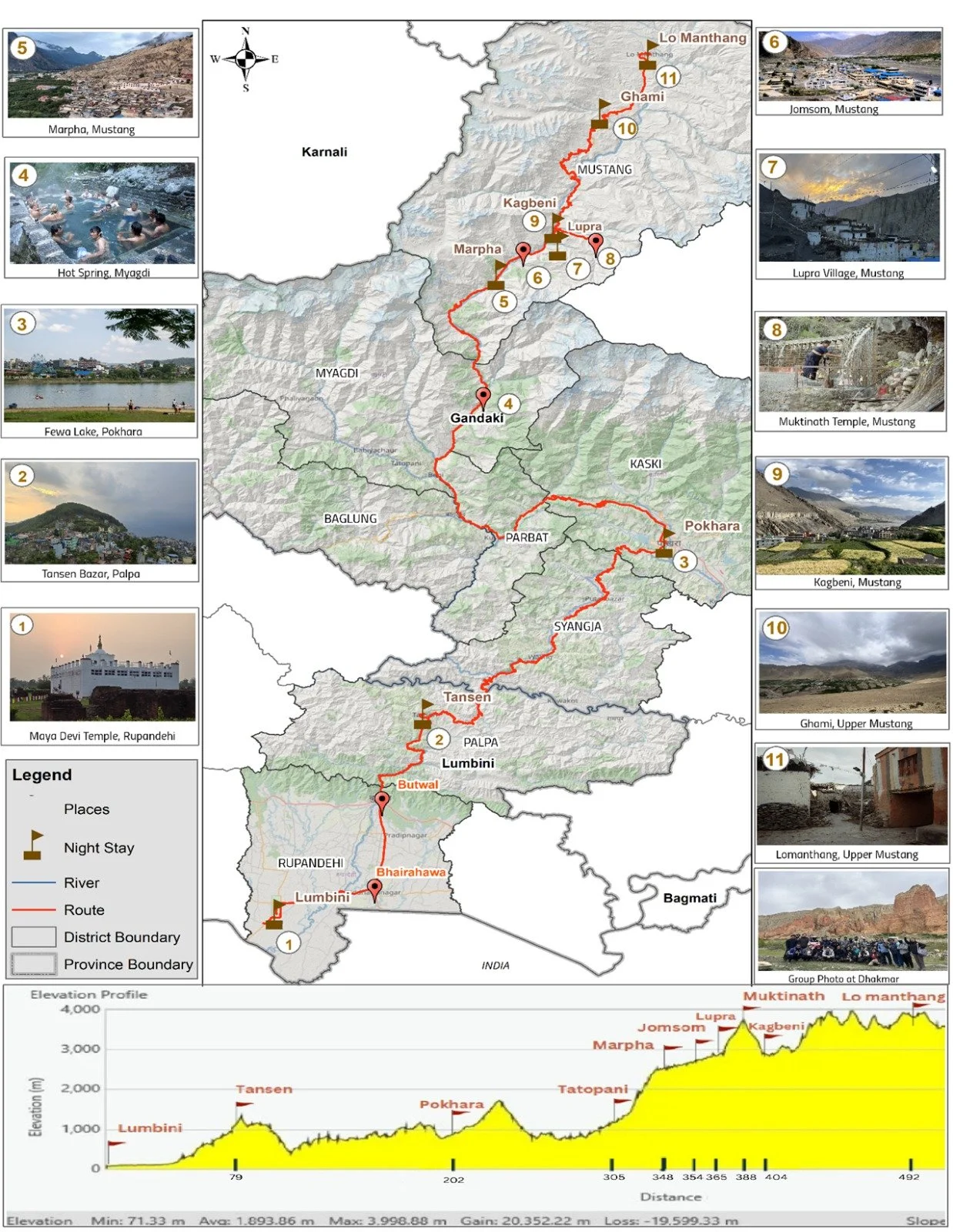
Study map of the transect from Lumbini to Lomanthang
Transect flow
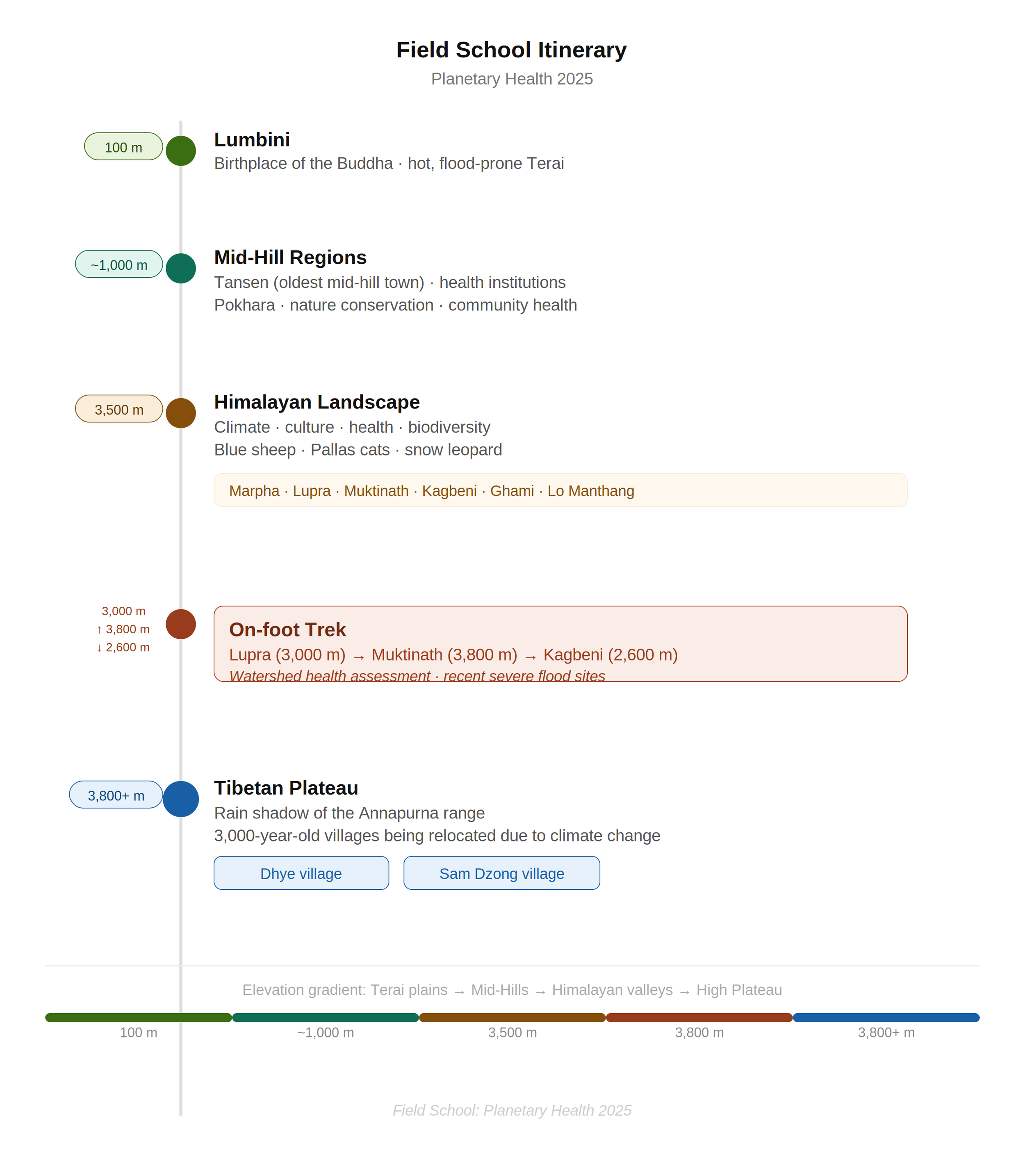
The Itinerary included:
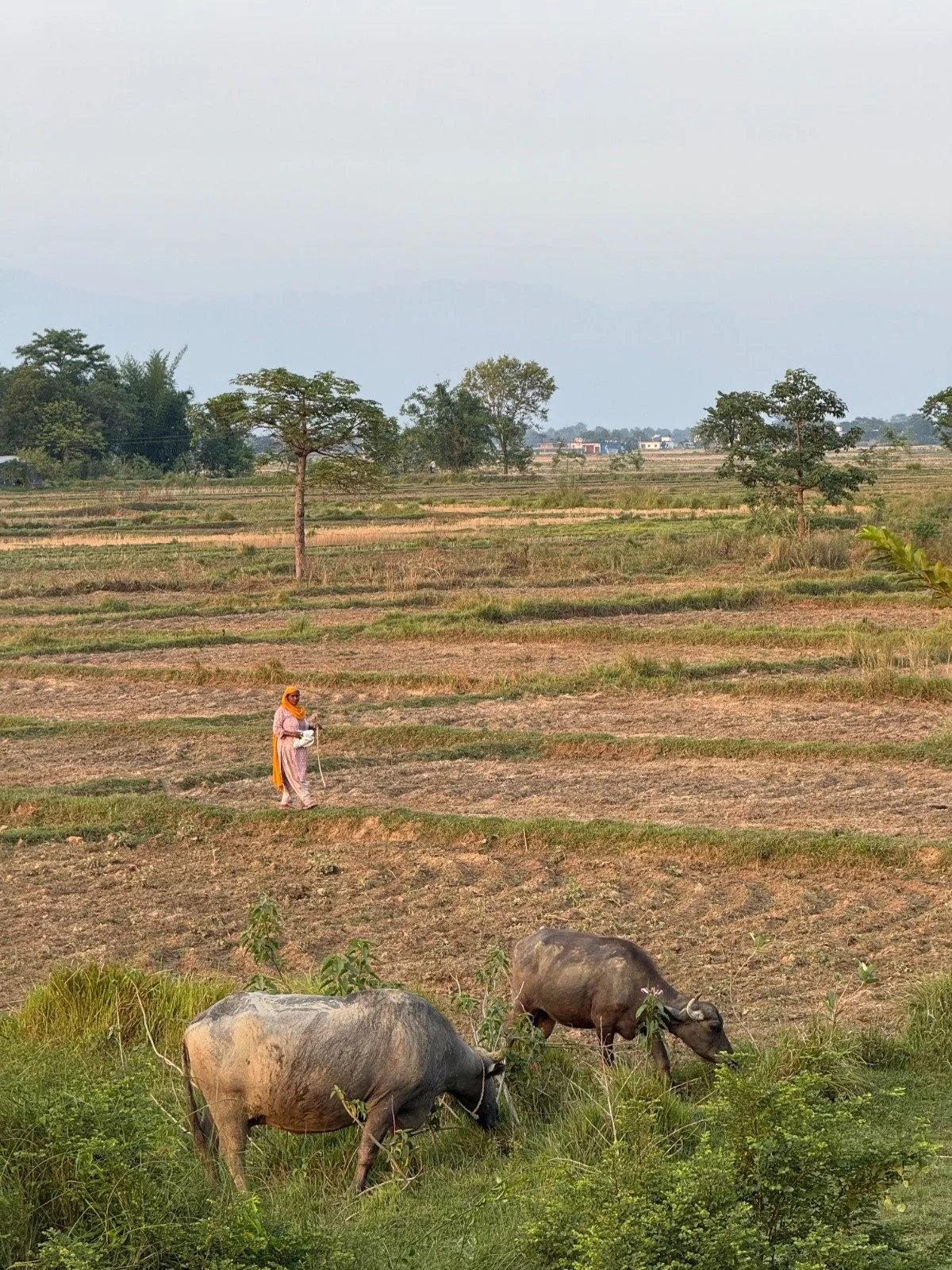
Lumbini (100 meters above sea level - masl): The starting point of the journey, and the birthplace of the Buddha, in the hot, flood-prone Terai region.
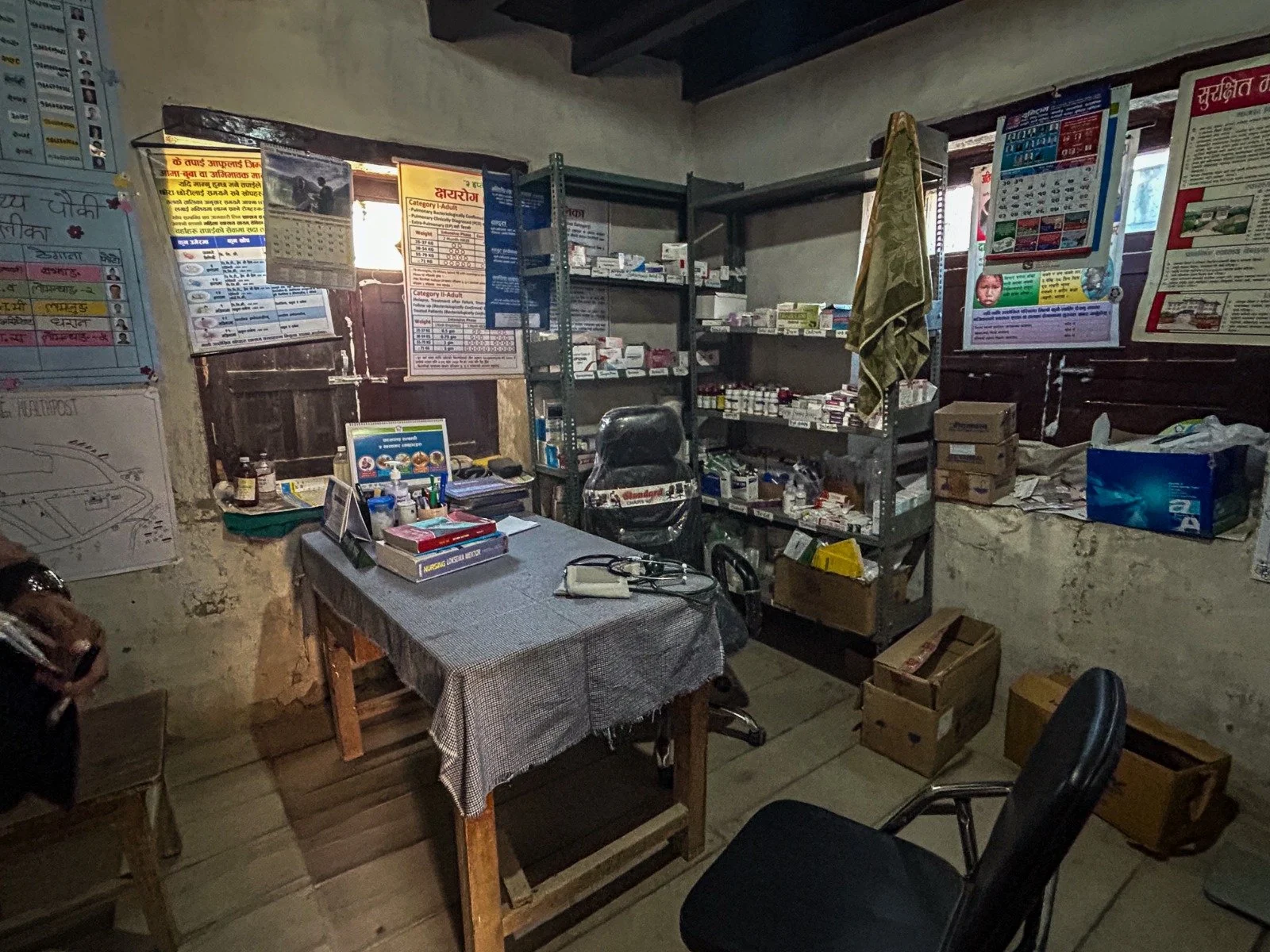
Mid-Hill Regions (~1,000 masl): Students explored health institutions and the oldest town of the Mid-hill settlement of Tansen, as well as the touristic town of Pokhara and its surrounding nature conservation areas and community health contexts.
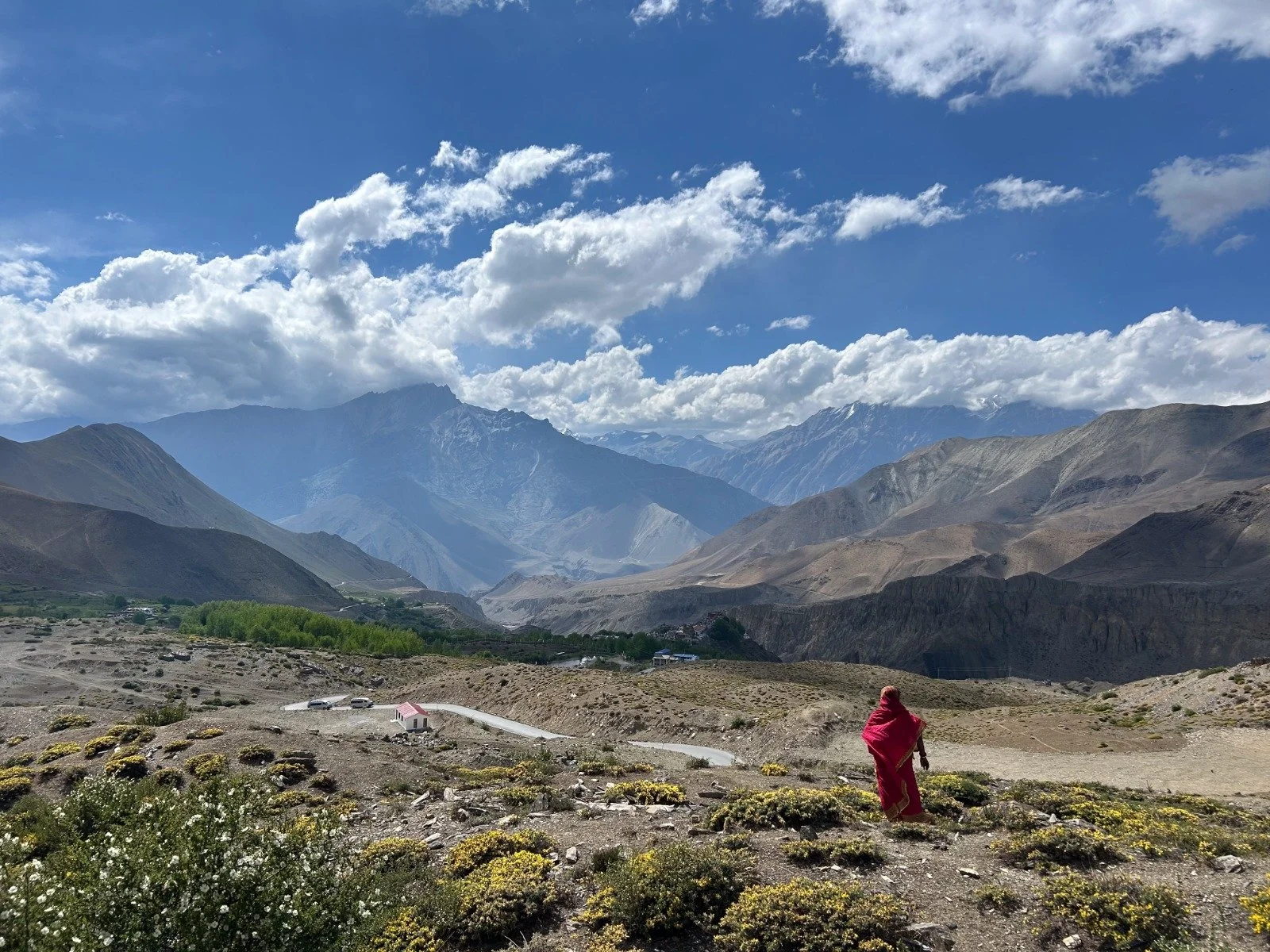
Exploring Himalayan landscape – culture, climate, health, biodiversity: Students learned how global change is impacting biodiversity in this home of blue sheep, pallas cats, and the elusive snow leopard (3,500 masl), covering Marpha, Lupra, Muktinath, Kagbeni, Ghami, and Lomanthang were explored.
On foot experience – Lupra (3,000 masl) – Muktinath (3,800 masl) – Kagbeni (2,600 masl): Students trekked up from Lupra to the Muktinath Hindu pilgrimage site and down to Kagbeni, assessing the Lupra and Jyong Khola watershed health — places that have recently experienced severe flood events.
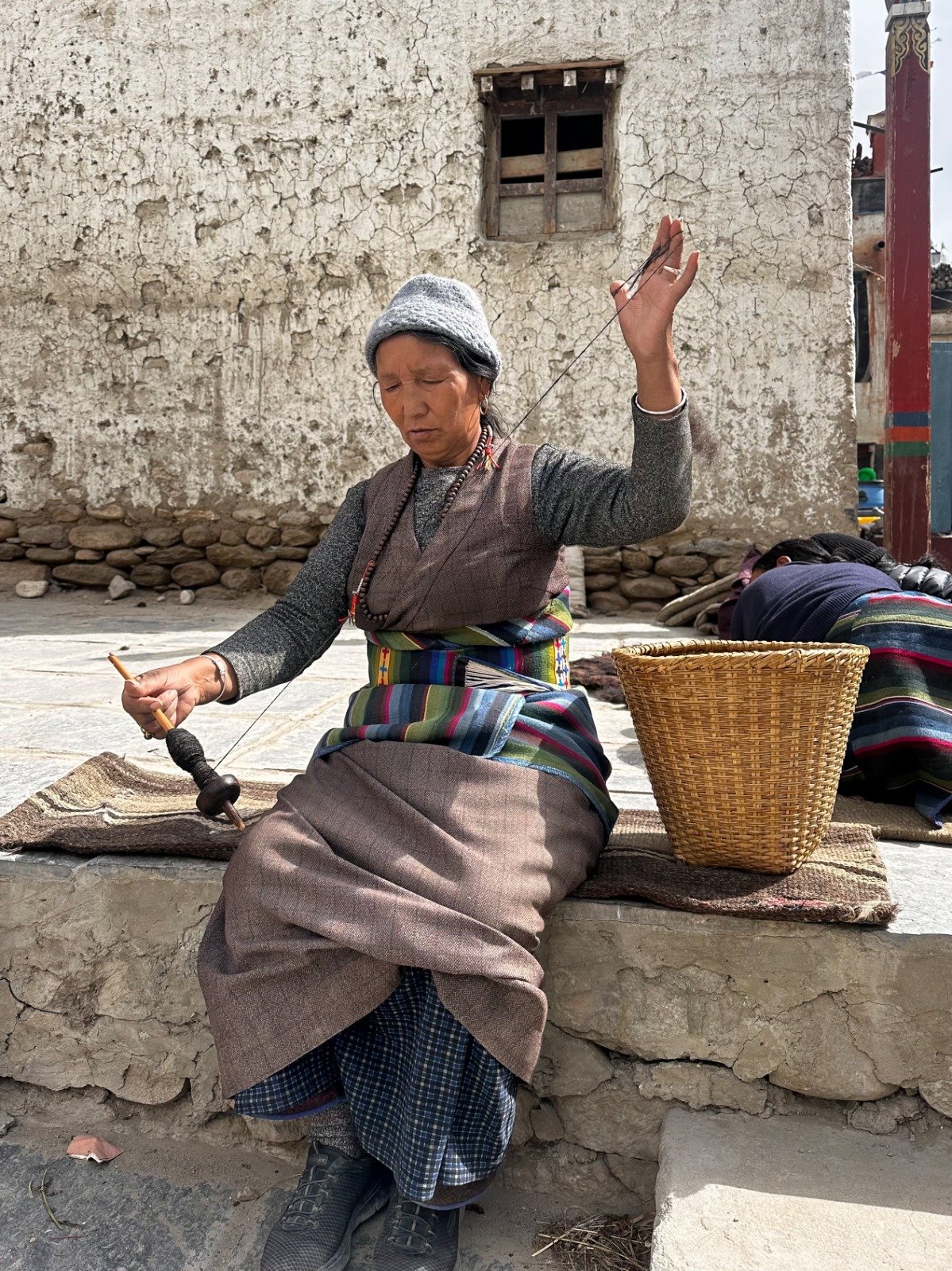
Tibetan Plateau (~3,500-3,800 masl) Students concluded the field school at the Tibetan Plateau in the rain shadow of the Annapurna range, where 3,000-year-old villages (Dhye and Sam Dzong) are being relocated due to climate change.
At each stop, students examined climate data, met with local officials, and gained insights from Nepali and foreign researchers and experts on the nexus of global change (climate + land use/land cover), development, and human health and well-being. Students also learned how locals are navigating more sustainable solutions to their challenges within the Planetary Health framework.
Sample for arrangement:
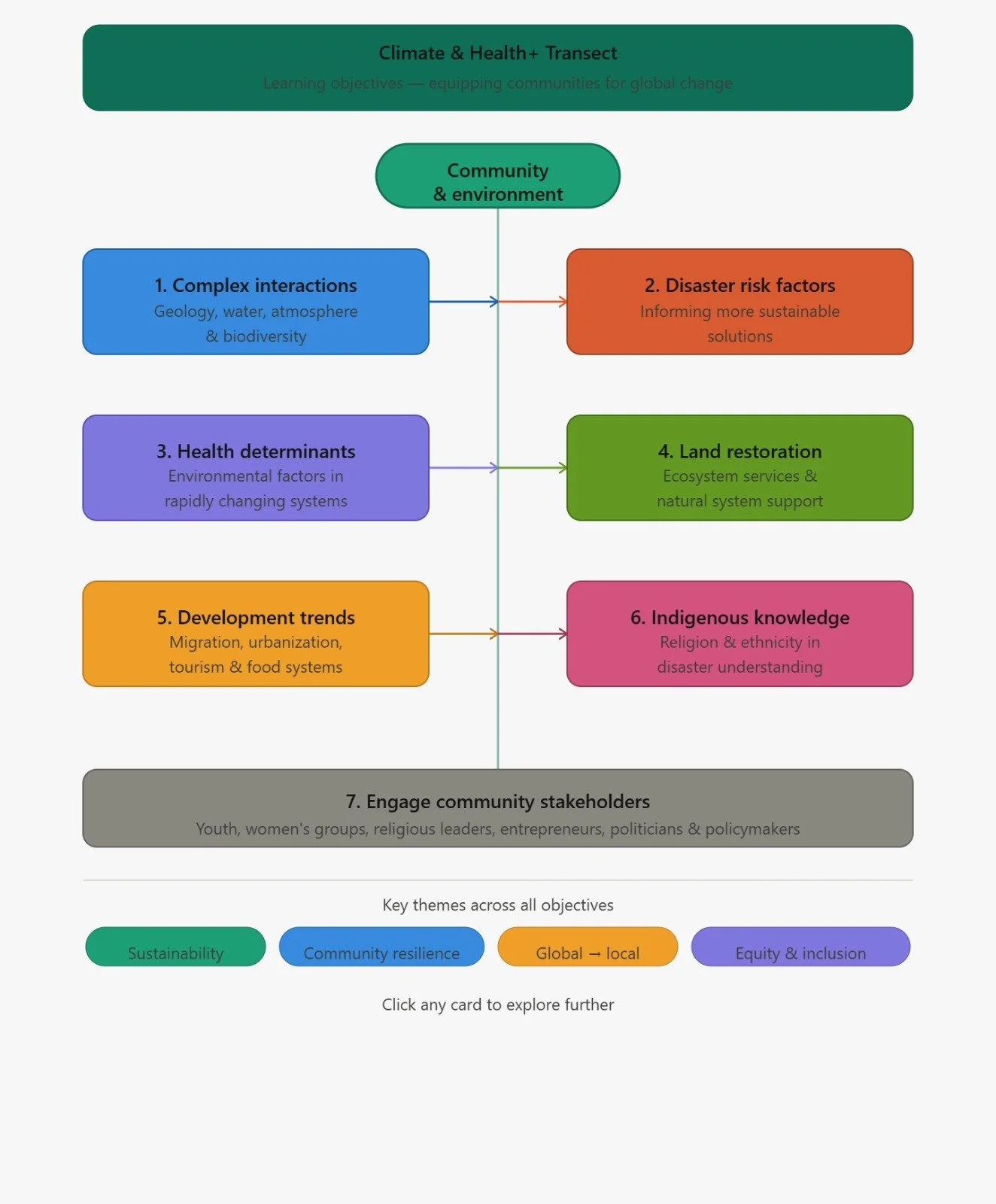
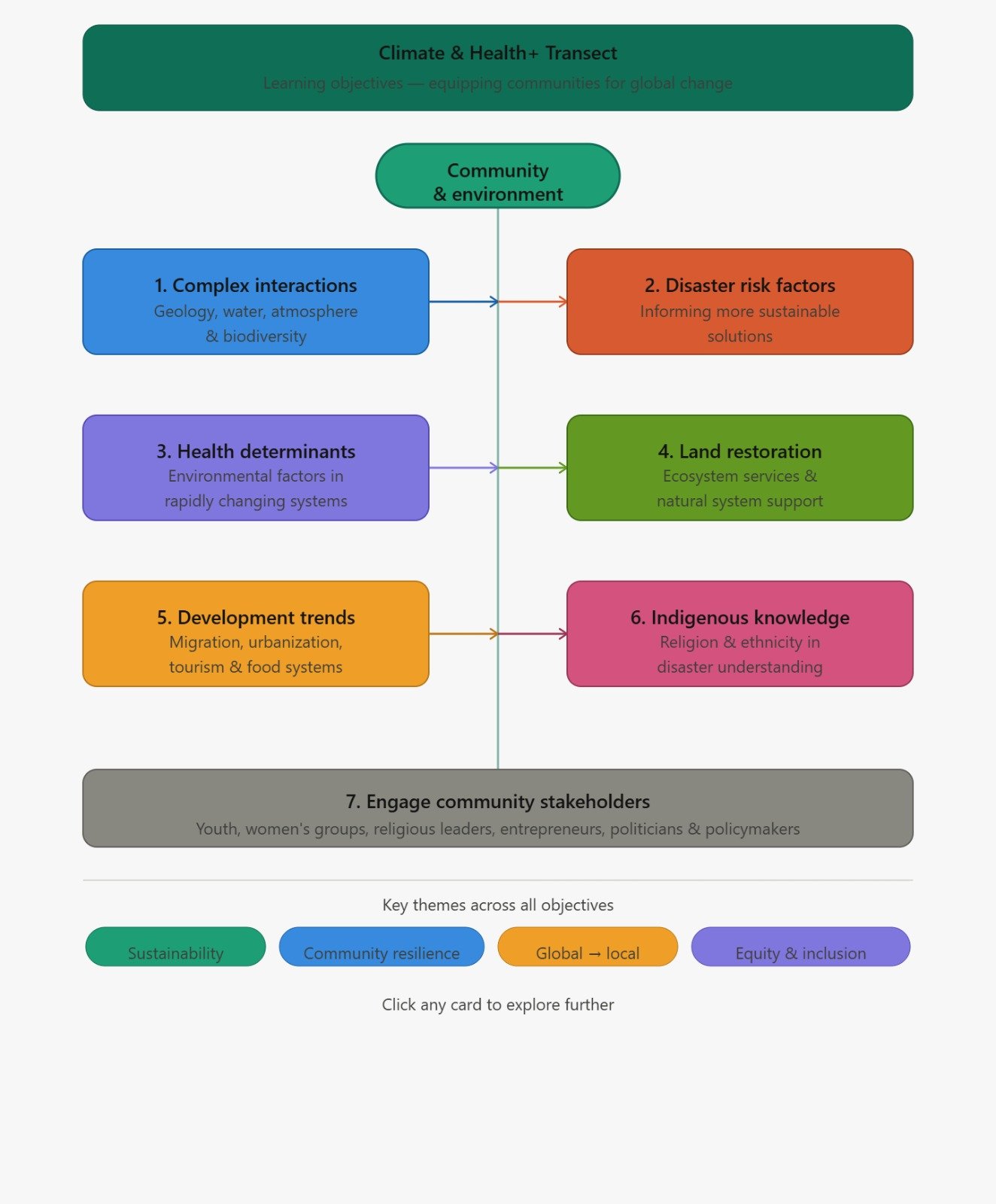
Learning Objectives
01 — Ecosystems Interactions between communities and environmental change
02 — Disaster Risk Identify climate risk factors and pathways to sustainable solutions
03 — Health Environmental drivers of disease burden and psychosocial resilience
04 — Restoration Sustainable land and ecosystem regeneration practices in the field
05 — Development Migration, tourism, urbanisation, and changing food systems
06 — Local Knowledge Indigenous, religious, and ethnic framings of disaster and solutions
07 — Community Engagement Direct engagement with youth, women's groups, religious leaders, entrepreneurs, and policy makers
Cross cutting themes Across all objectives:
Sustainability
Community resilience
Systems thinking
Equity and inclusion
Core Learning Themes
The field school explored Planetary Health through seven interconnected lenses:
Ecosystems
Understanding relationships between environmental change and communities.
Disaster Risk
Identifying climate risks and pathways to resilience.
Health
Exploring environmental drivers of physical and psychosocial well-being.
Restoration
Observing sustainable ecosystem regeneration.
Development
Examining migration, food systems, tourism, and modernization.
Local Knowledge
Learning from indigenous, religious, and cultural perspectives.
Community Engagement
Direct dialogue with youth, women’s groups, leaders, and policymakers.
Methodology
The field school used the “Doughnut of Social and Planetary Boundaries” framework to anchor the transdisciplinary concept of Planetary Health. The inner ring represents the social foundation (Raworth, 2017; DEAL, 2025) and the outer ring of the ecological ceiling of Planetary boundaries (Rockström et al. 2009). For each of the field school visits, students created a perceptual model to illustrate how each site balances human well-being and ecological sustainability.
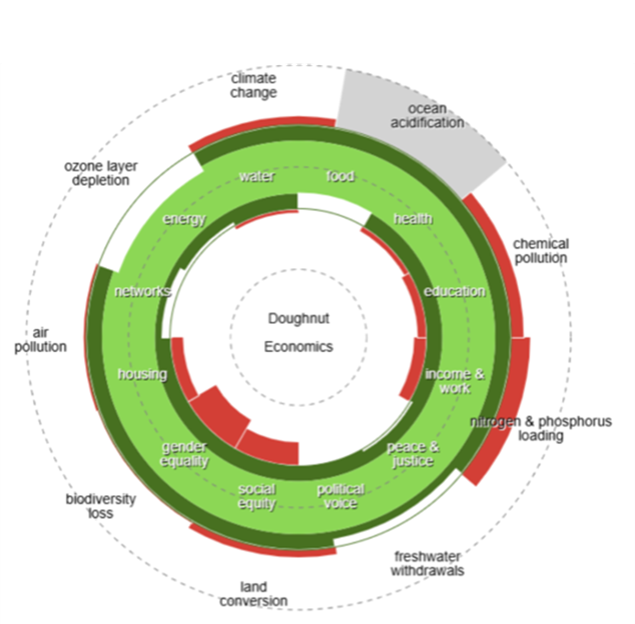
Perceptual model of Lumbini, Nepal based on student perceptions. Using the Cambridge Doughnut’s online Doughnut Creator, students rated each dimension on a Likert scale from 0-10. (0 represented being well within the safe space - no shortfall or overshoot - 5 indicated the boundary, and 10 denoted a severe shortfall or overshoot).
For more information on the Doughnut economic framework :
DEAL [Doughnut Economics Action Lab]. (2025) https://doughnuteconomics.org/doughnut
Raworth, K. (2017) Doughnut Economics. Seven ways to think like a 21st -century economist. London: Random House Business Books.
Rockström, J., Steffen, W., Noone, K., Persson, Å. et al. (20099. A safe operating space for humanity. Nature 461: 472-475 DOI 10.1038/461472a
From The Field
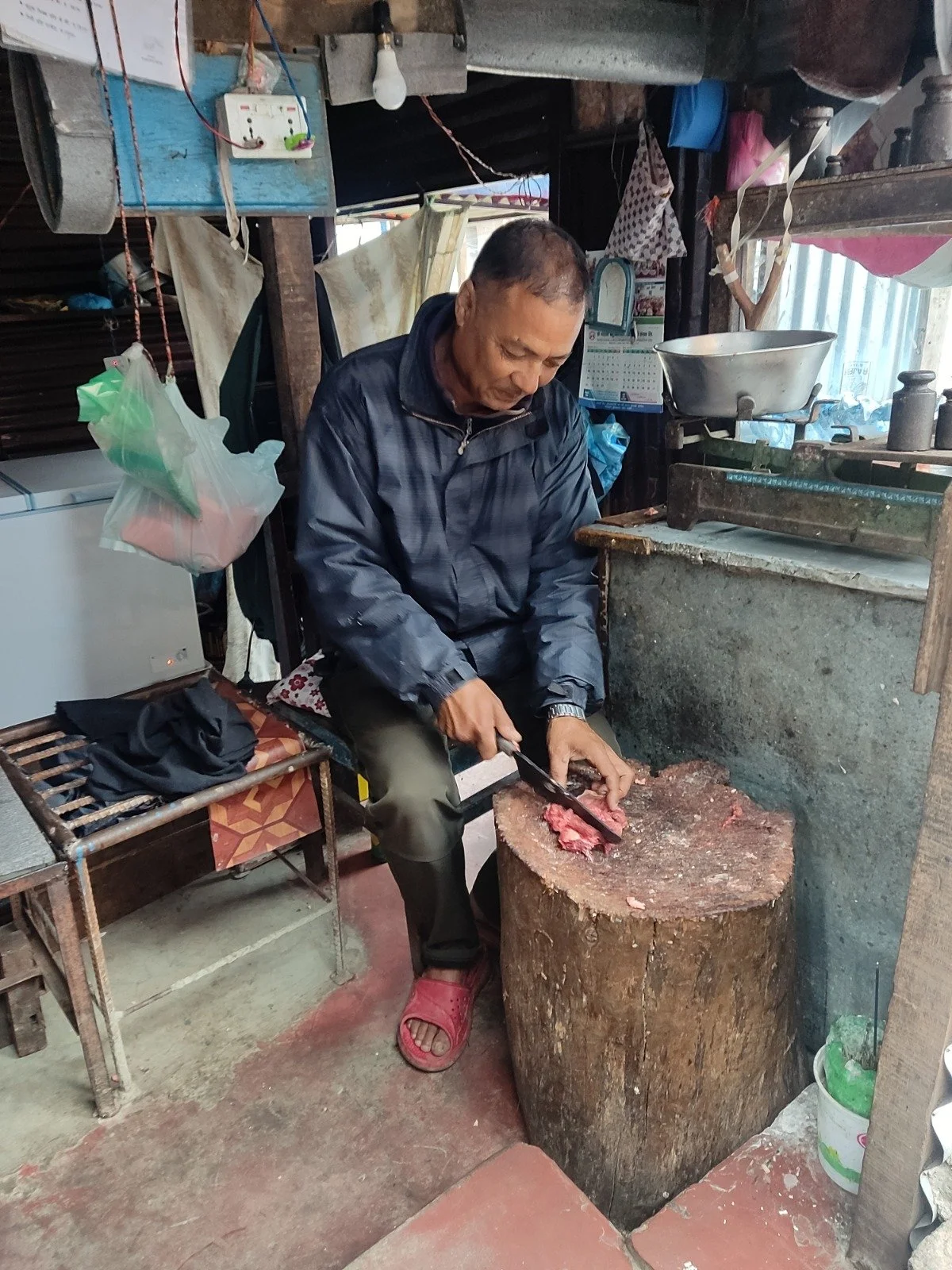
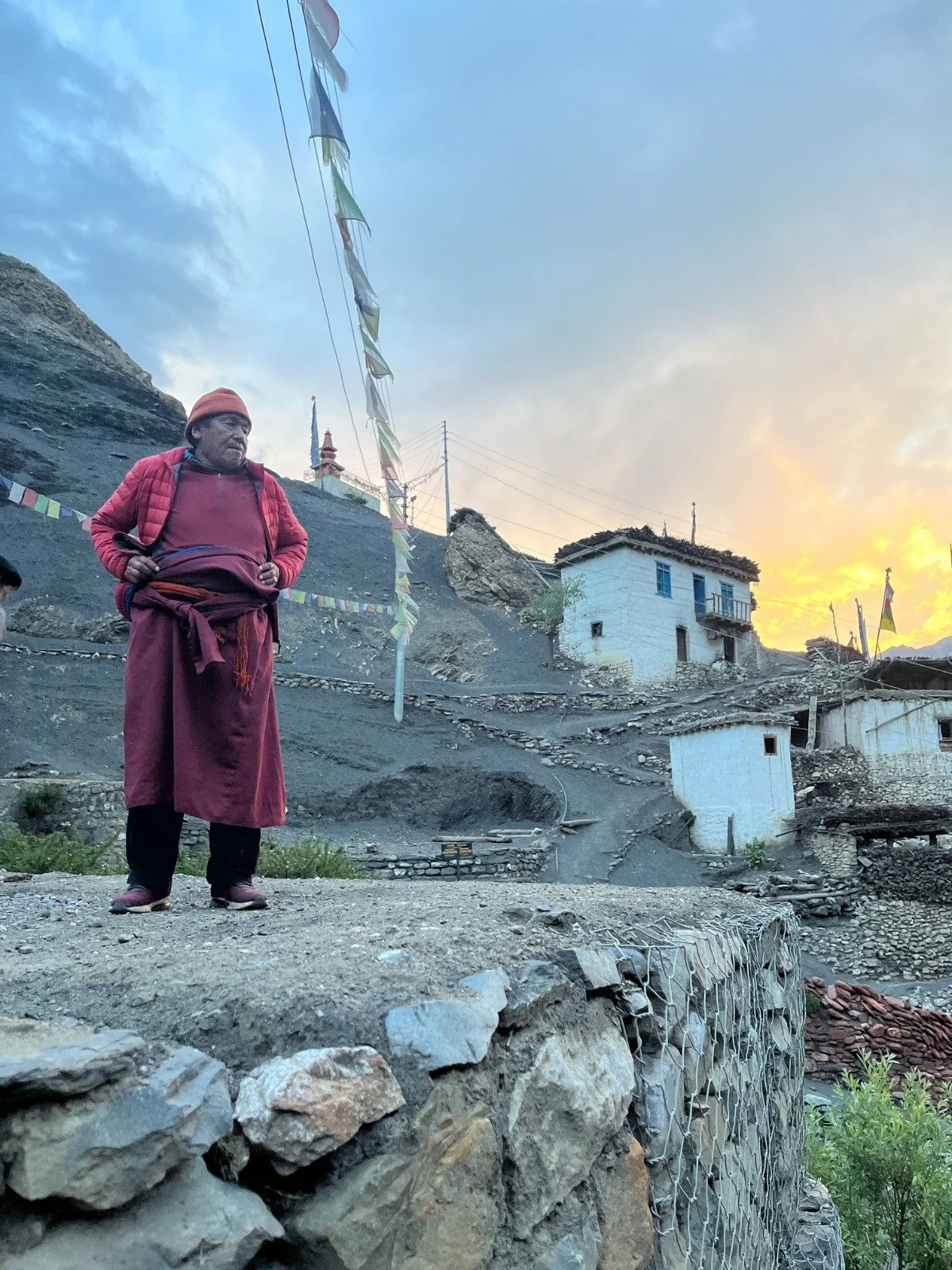
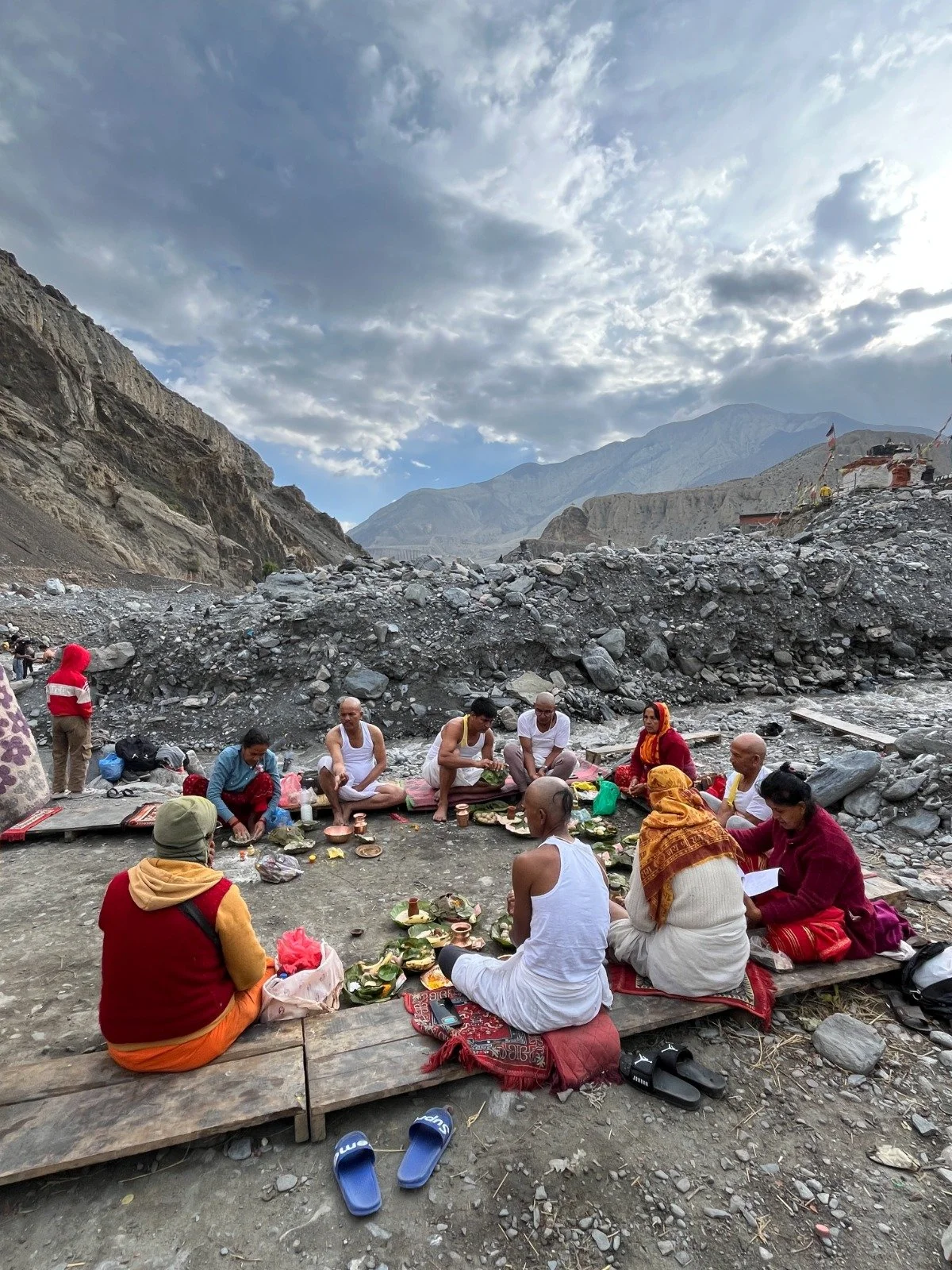
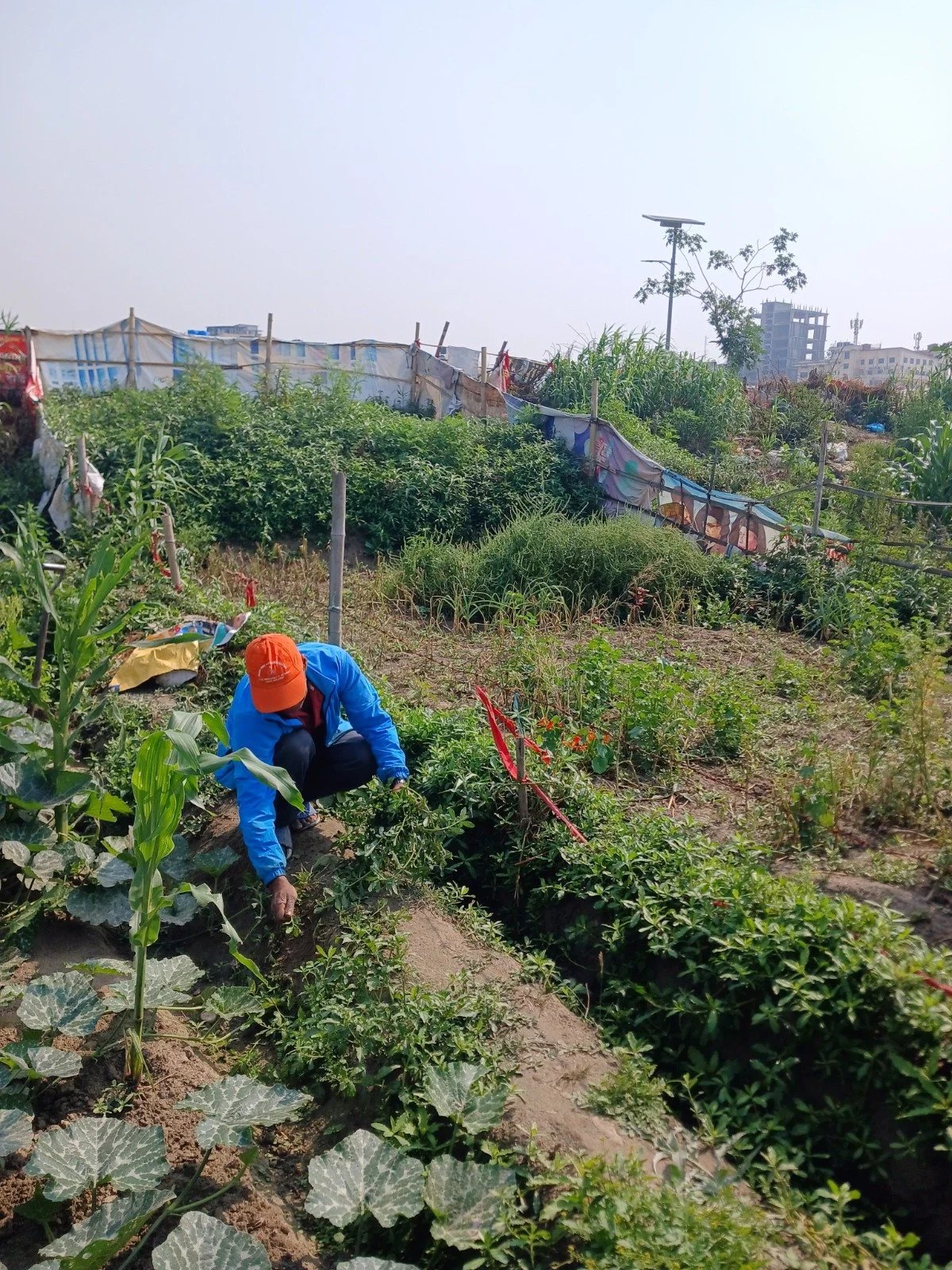
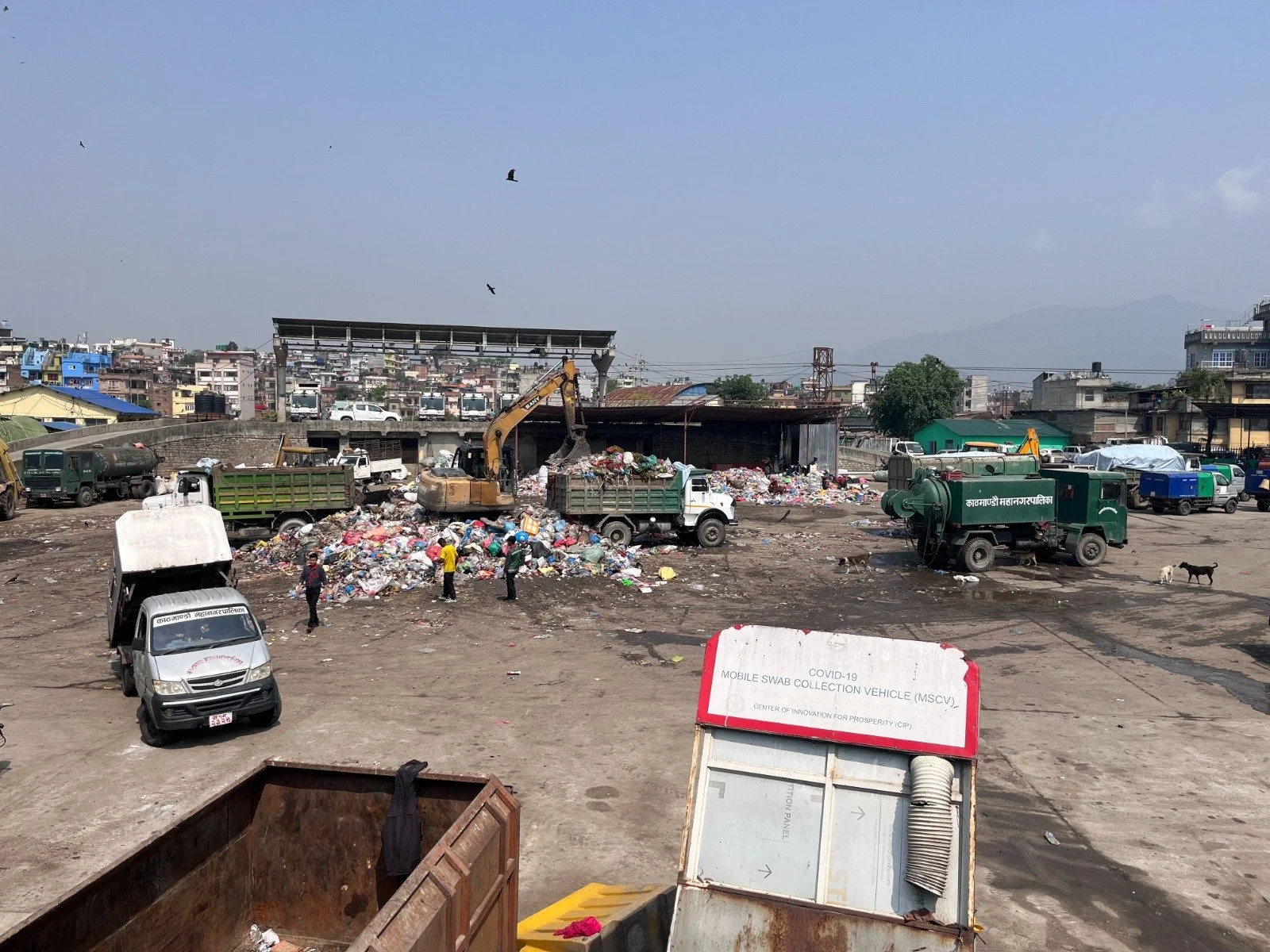
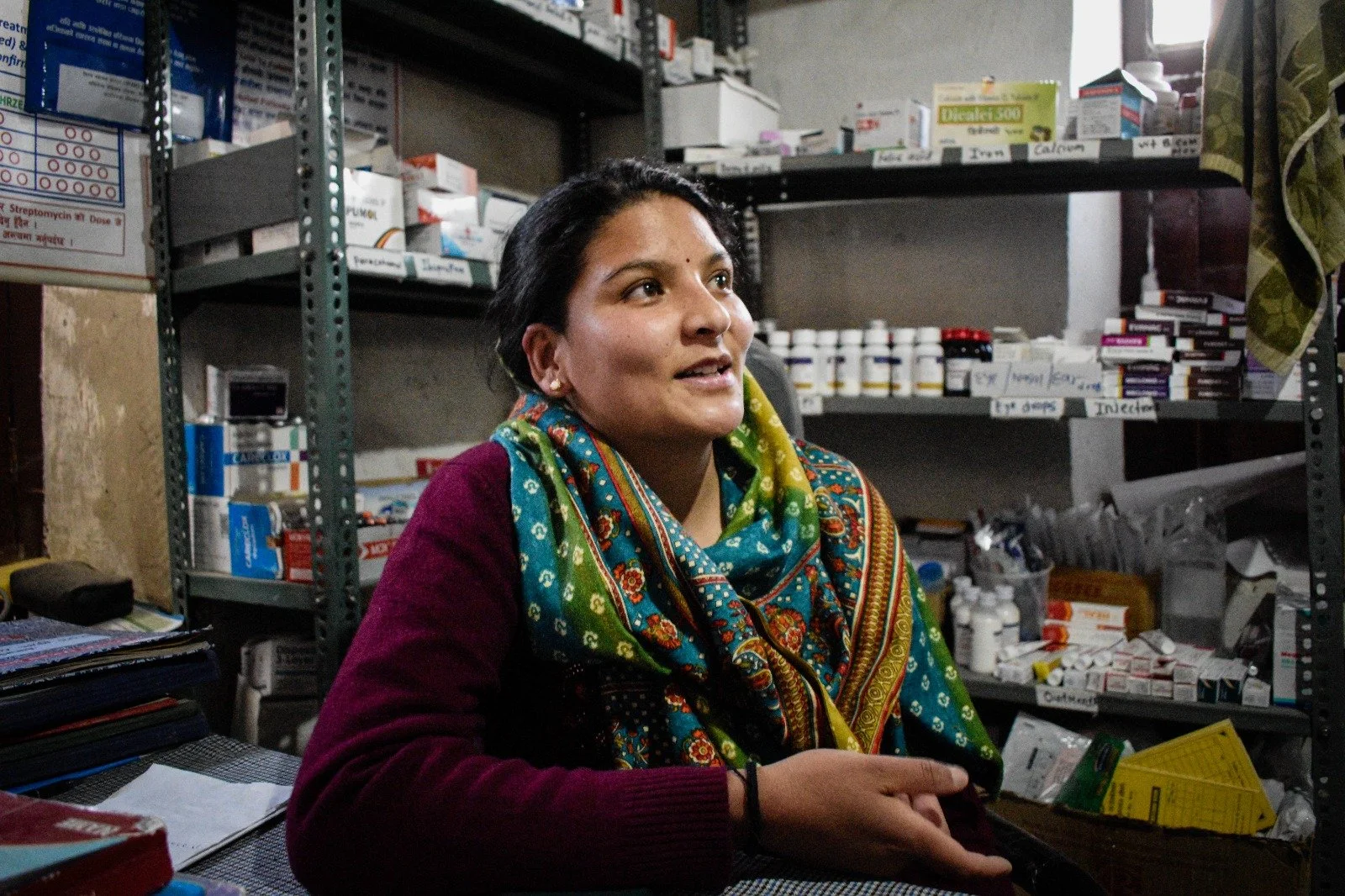
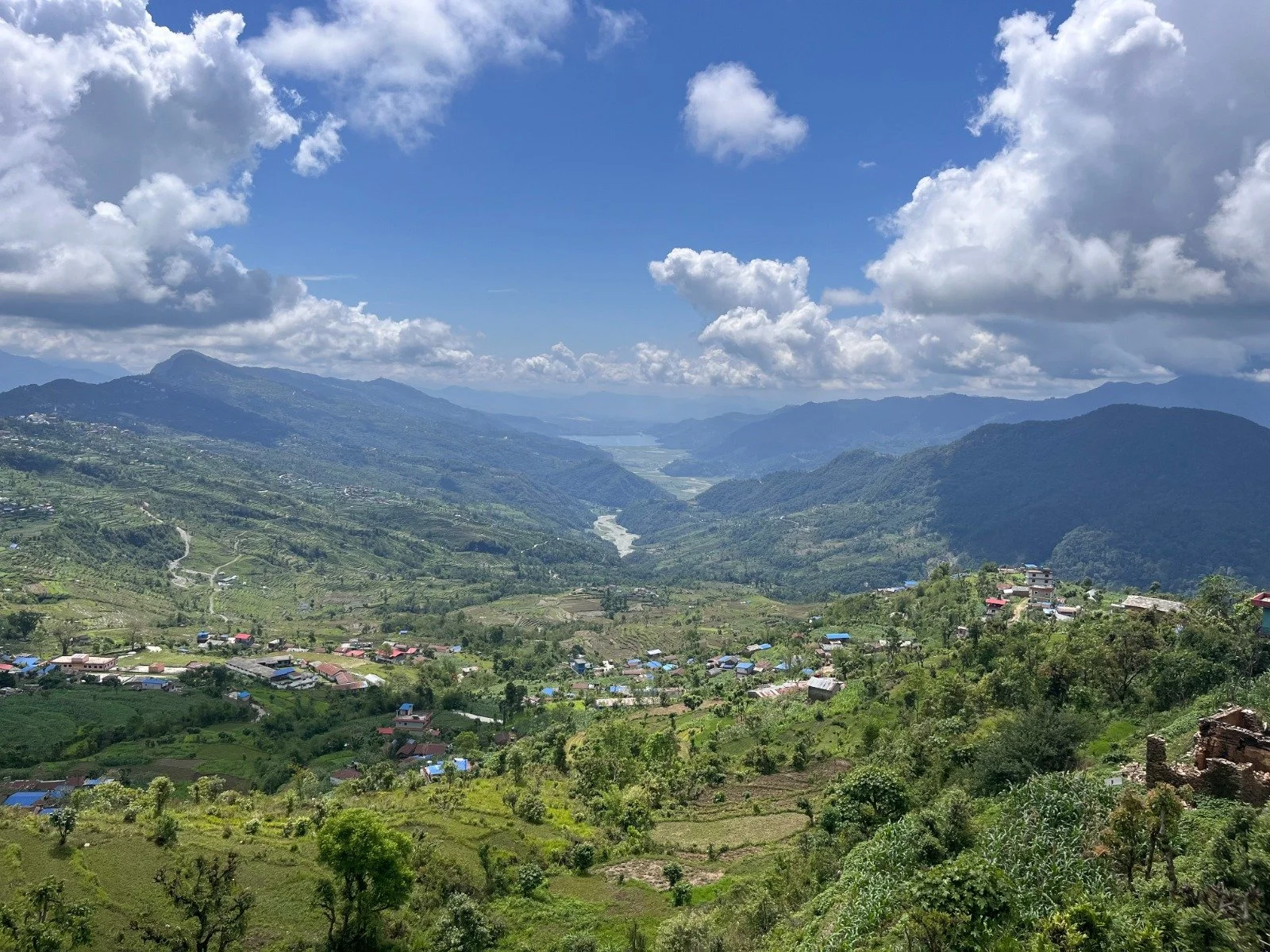
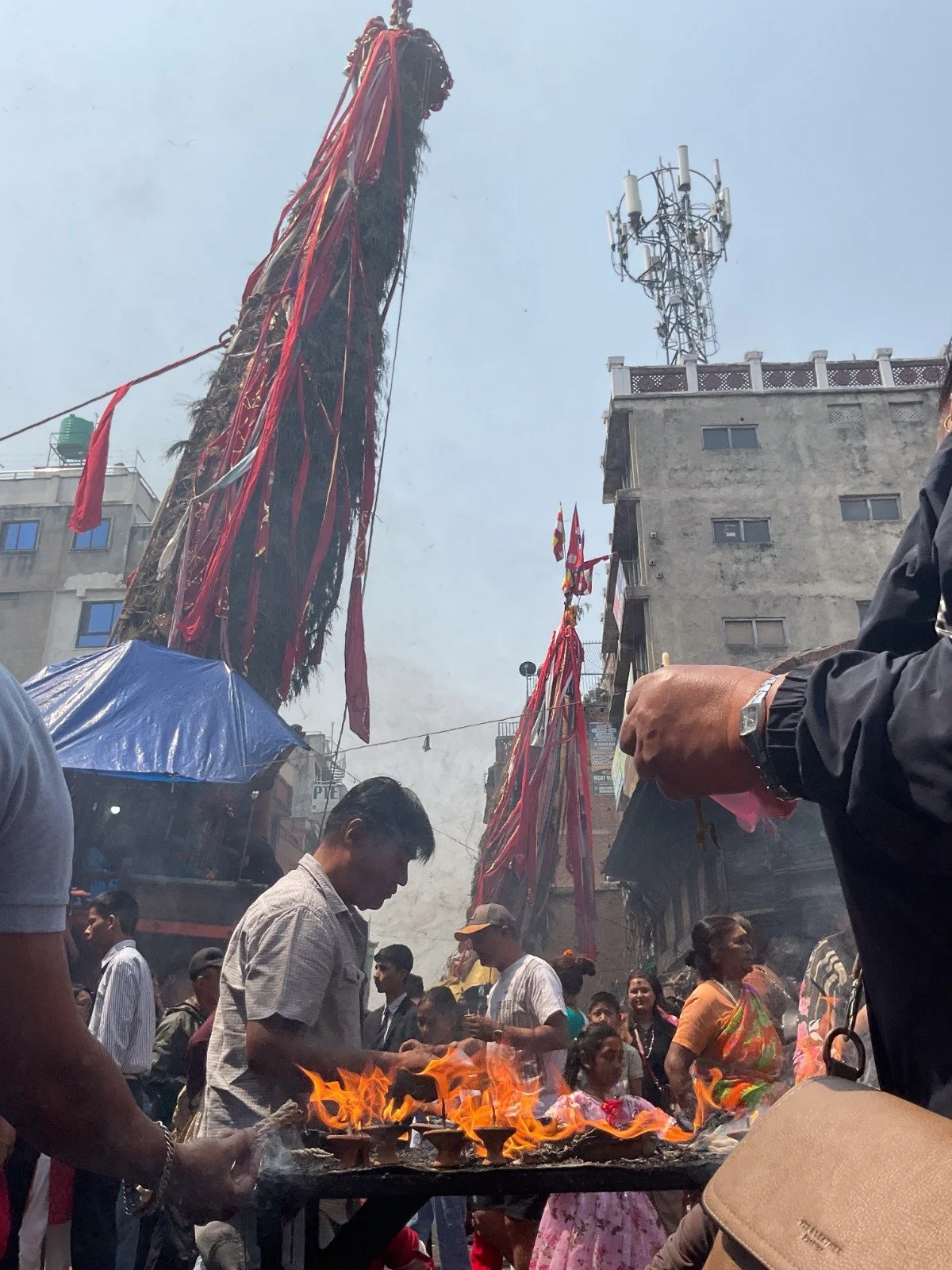
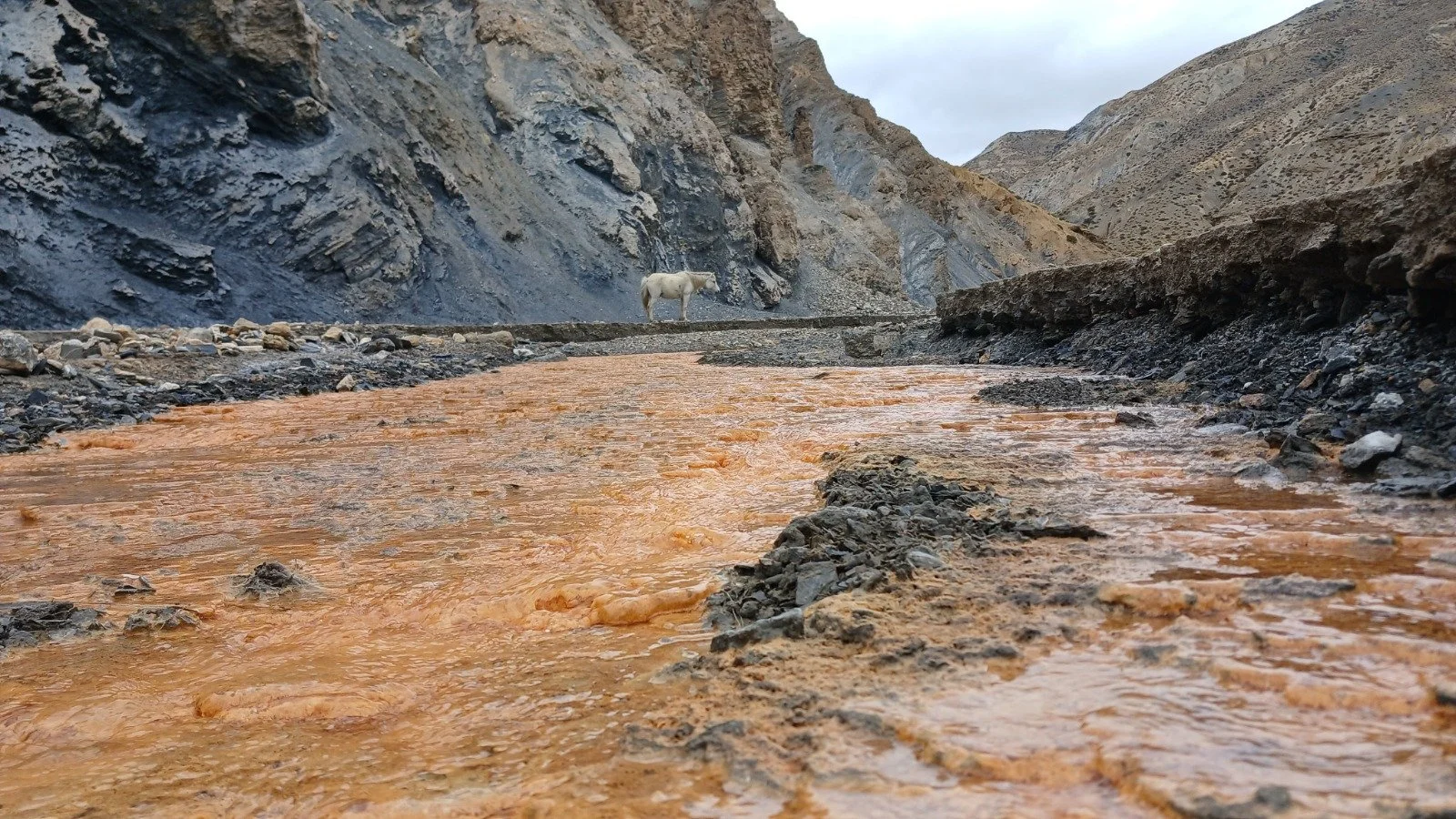
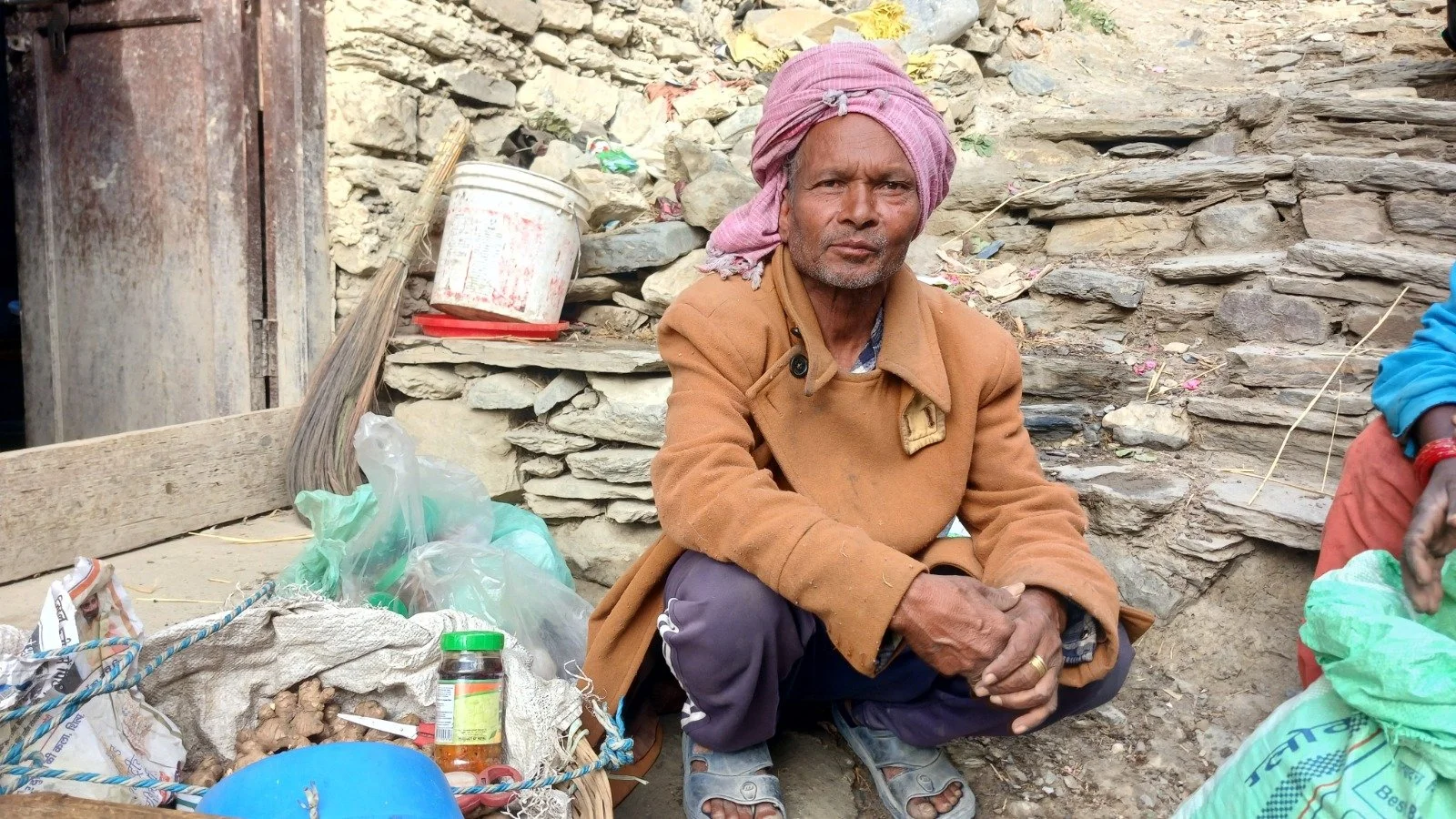
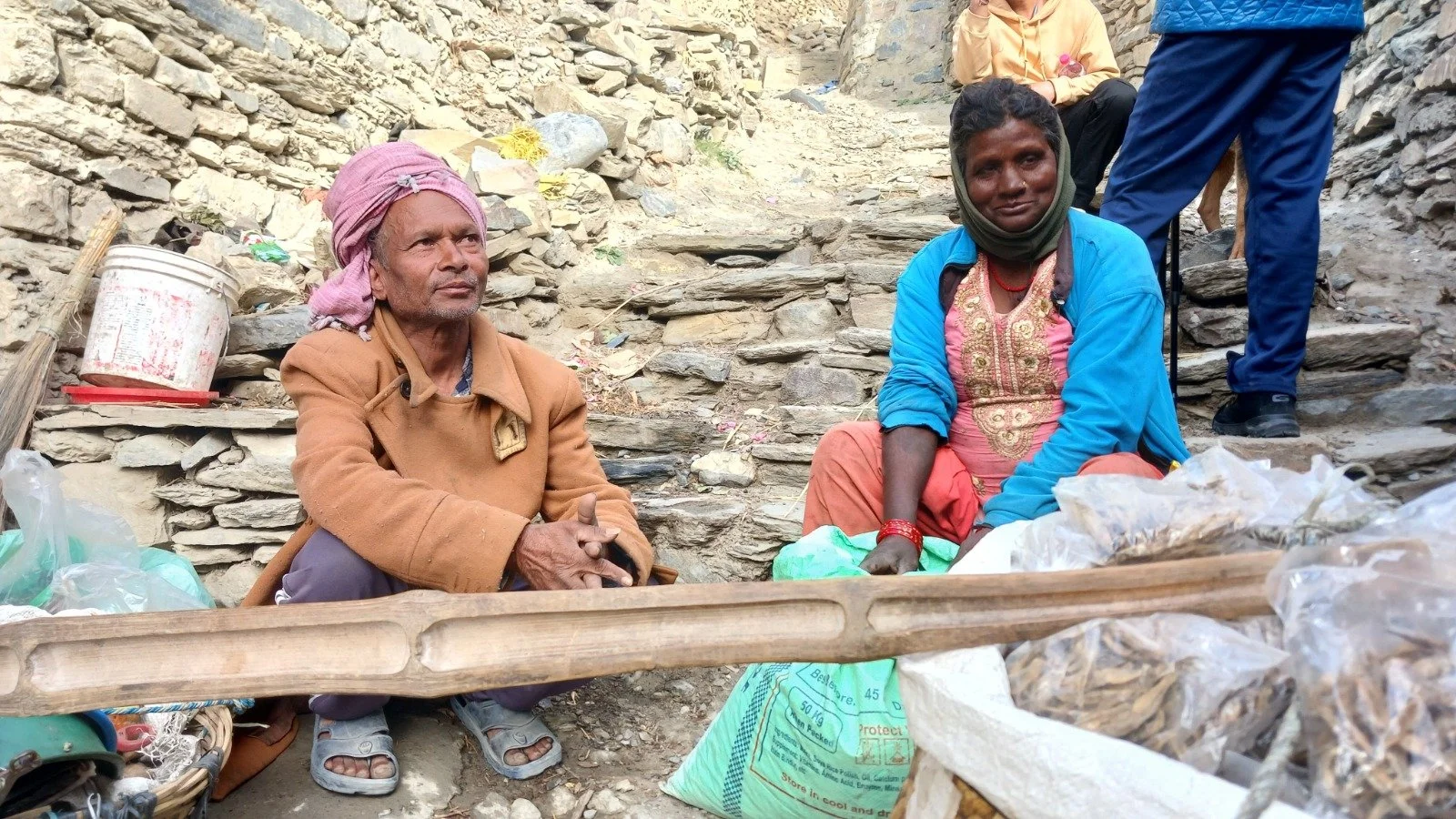
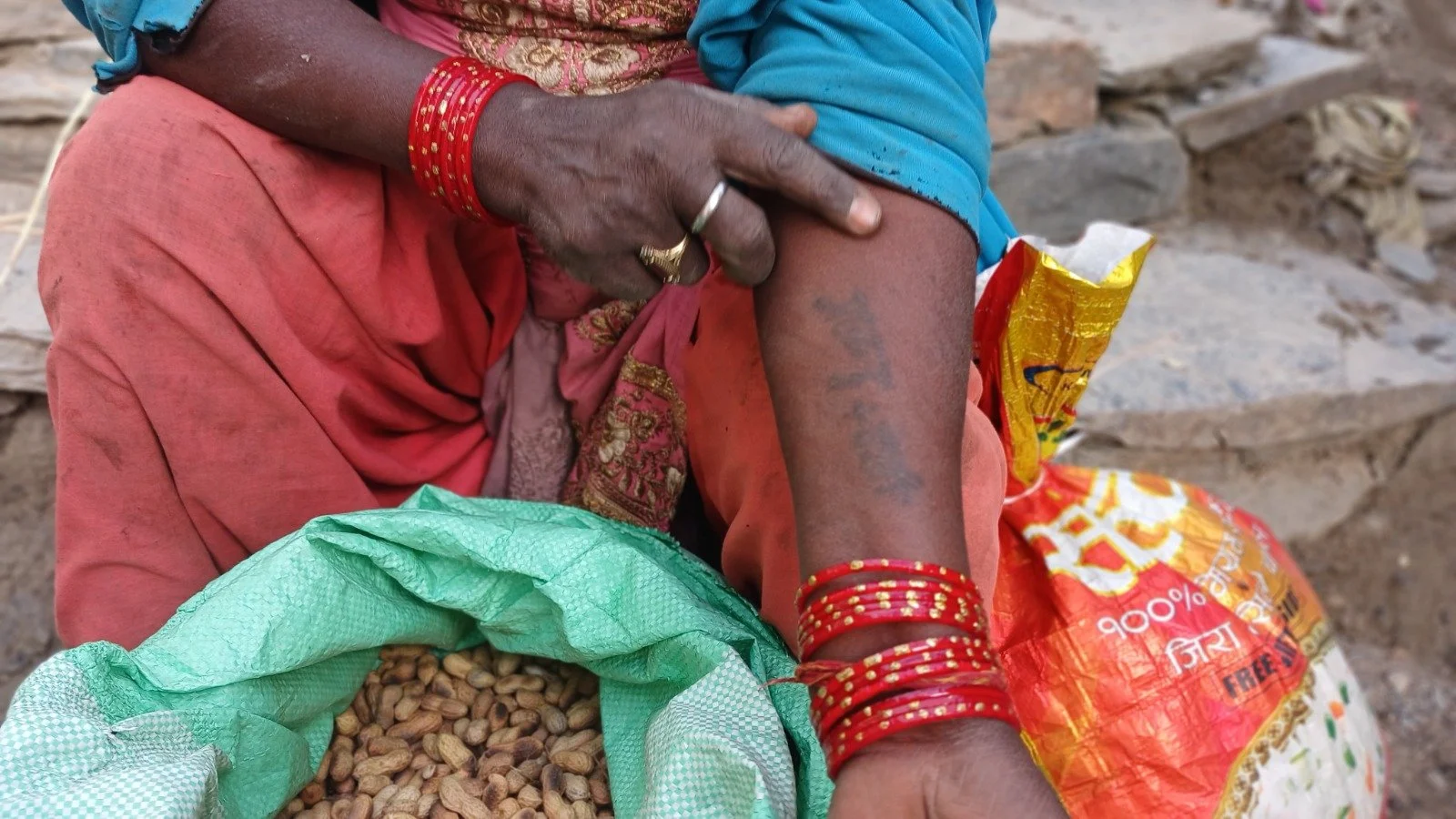
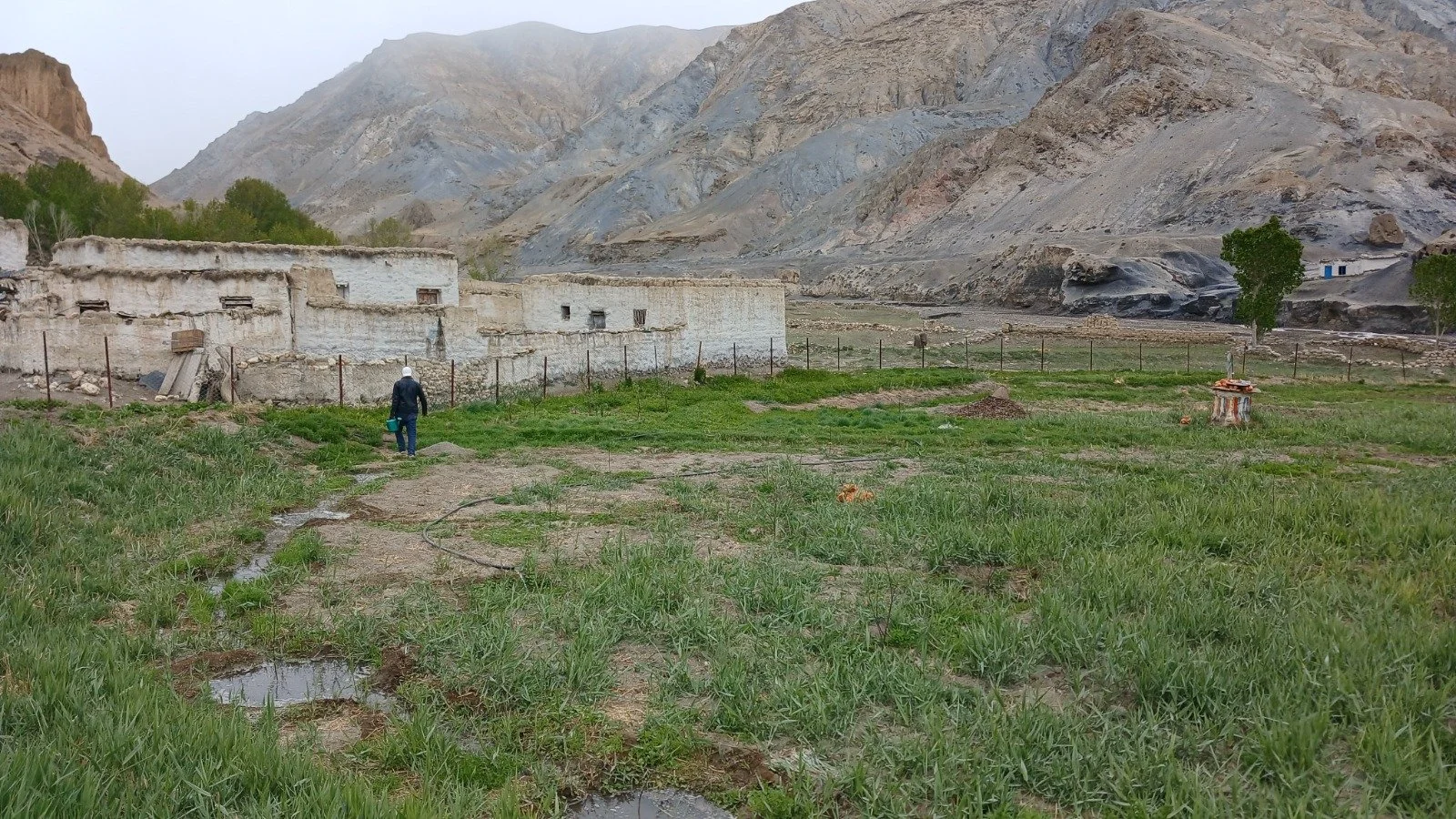
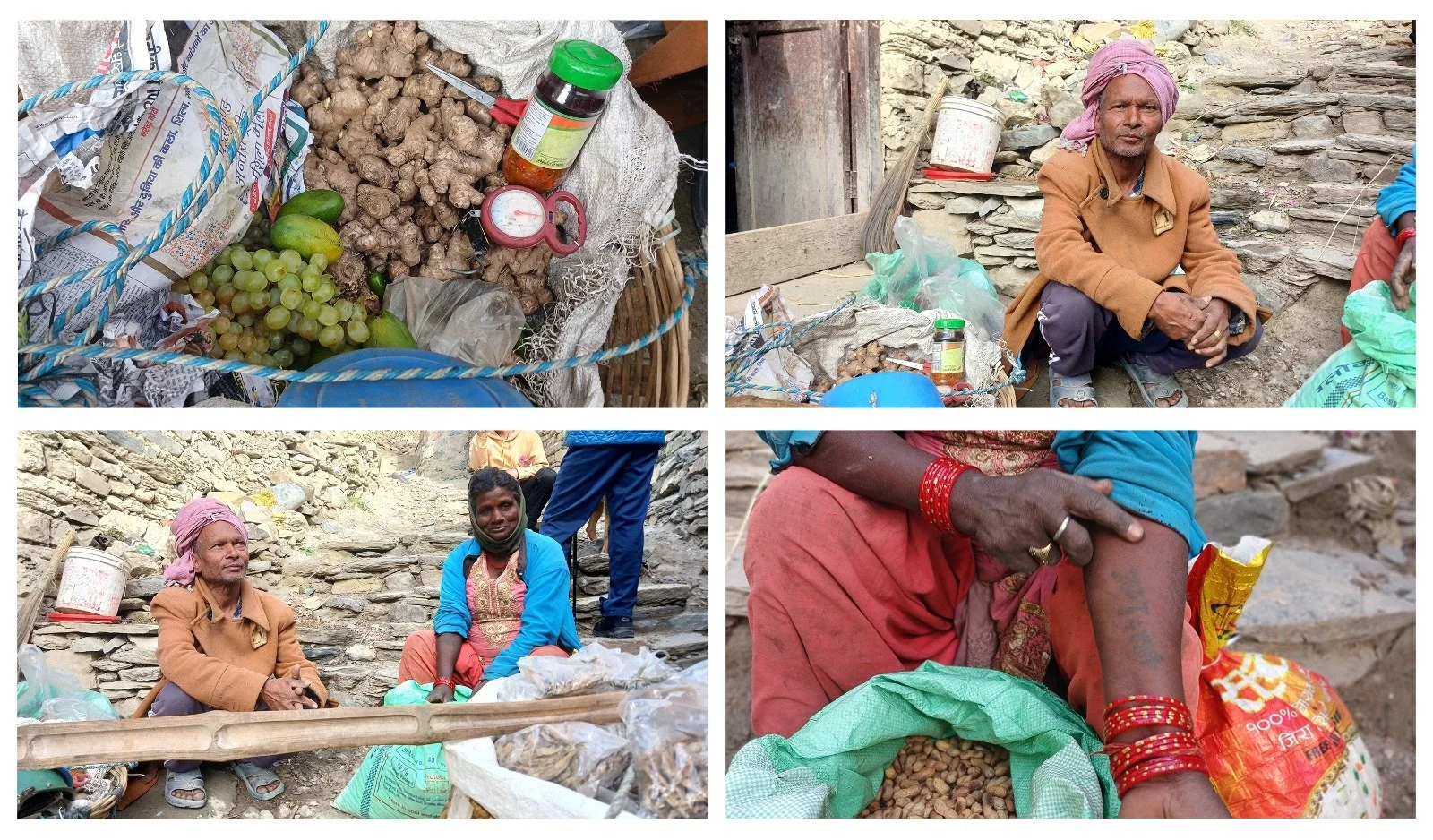
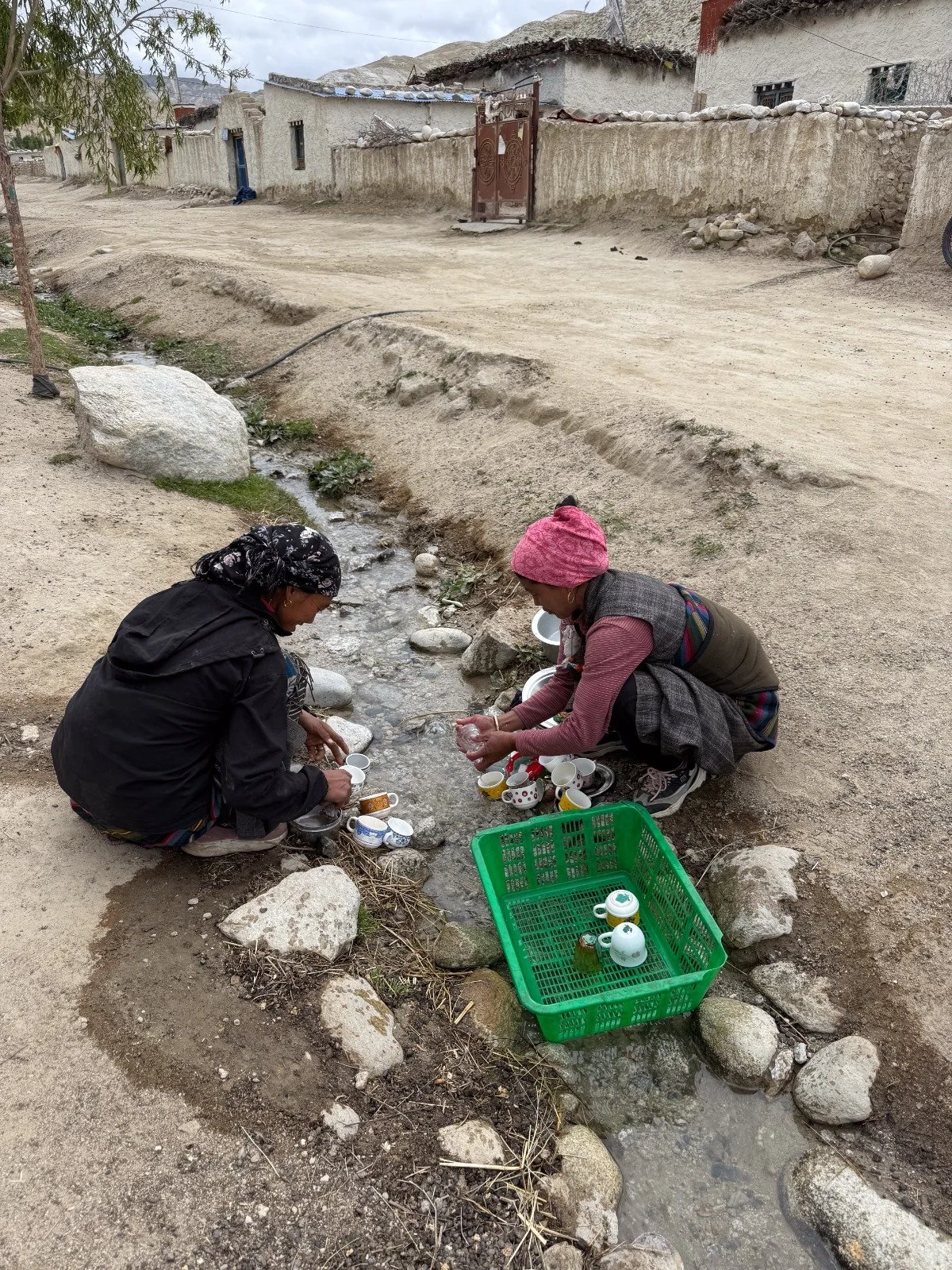
Photographs by participants of the 2025 Planetary Health Field School — a visual record of landscapes, communities, and encounters documented by students as they traversed one of Earth's most dramatic climate transitions, capturing what they understand about planetary health.